BPC-157 is one of the most talked-about peptides in injury-recovery research. If you’ve come across the name and want to know what it actually is, what benefits researchers have studied, and how it’s thought to work, here’s a plain-language breakdown, along with how it compares to another popular research peptide, TB-500. This content is provided for Research Use Only (RUO).
What Is BPC-157?
BPC-157 stands for “body protection compound,” with the number used as an identifier for this particular sequence. It’s a synthetic peptide, meaning it’s lab-made from a short chain of 15 amino acids (the building blocks of proteins). It’s based on a small piece of a protein naturally found in human gastric juice, the fluid in your stomach that helps digest food.
Researchers first isolated and studied it in Croatia in the 1990s. What made it interesting from the start is that it’s unusually stable. Most peptides break down quickly once they hit stomach acid, but BPC-157 has been reported to stay intact in gastric juice for hours, which is part of why researchers have studied it for gut-related healing as well as injuries elsewhere in the body.
BPC-157 has never been approved as a medicine anywhere in the world. It’s made and sold strictly as a research compound, and the World Anti-Doping Agency has banned it in competitive sports since 2022.
Benefits of BPC-157
Almost everything known about BPC-157’s effects comes from lab and animal studies, not large human trials, so the “benefits” below are really research findings, not proven treatments. With that in mind, here’s what researchers have focused on:
- Tendon and ligament repair. This is the most-studied area. Animal studies show faster healing and stronger tissue after injuries like a torn Achilles tendon, in part because BPC-157 seems to help new blood vessels grow into an injury site, something tendons are normally slow to do on their own.
- Muscle recovery. Research in animals has looked at whether BPC-157 speeds up recovery from muscle crush injuries and tears, with studies pointing to faster regrowth of muscle tissue.
- Gut healing. Because it comes from the digestive system in the first place, BPC-157 has been studied for protecting the stomach lining, including in animal models of ulcers caused by drugs like ibuprofen.
- General wound healing. Some research has looked at whether it helps skin and other tissue close and heal faster after an injury.
See also: BPC-157 Benefits and What Current Research Examines
How It Works
Researchers don’t have one single, confirmed answer for how BPC-157 works. Instead, a few overlapping ideas keep coming up in the research:
- It may help new blood vessels grow. This is called angiogenesis. Studies suggest BPC-157 increases the activity of growth factors that trigger blood vessels to form, which matters because slow-healing tissues like tendons often have a poor blood supply to begin with.
- It may protect cells from damage. This is sometimes called a cytoprotective effect, meaning it may help cells survive stress or injury rather than die off, which could help tissue recover instead of scarring.
- It may interact with growth-factor signaling. BPC-157 appears to influence some of the same cell-signaling pathways the body already uses to coordinate tissue repair.
It’s worth repeating that a lot of what gets said about BPC-157 online is extrapolated from rodent studies and lab-dish research, not from evidence in people, so these mechanisms should be read as “what researchers are exploring,” not settled fact.
INJURY AND RECOVERY
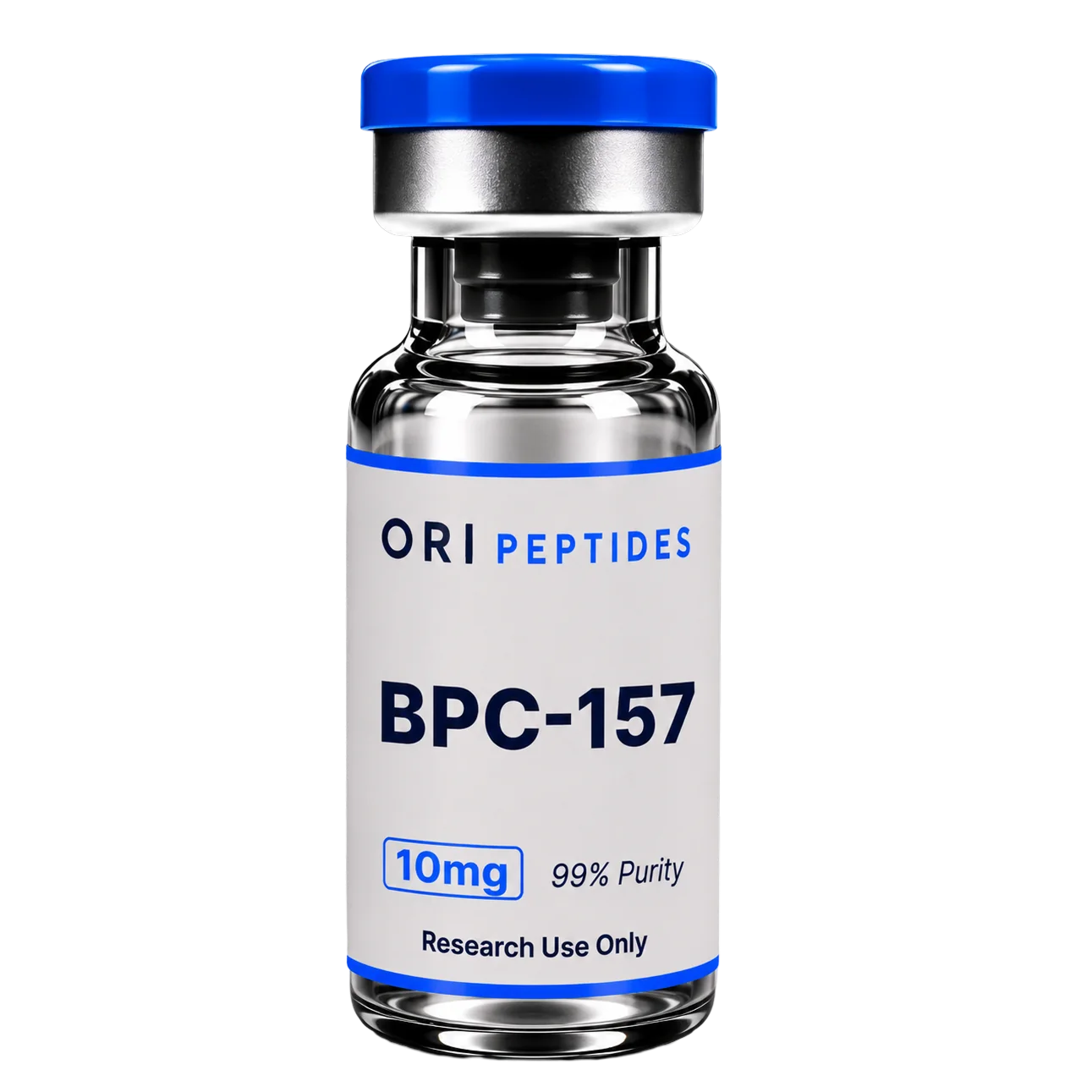
BPC-157
Dosage
There’s no approved or standardized dose for BPC-157, because it isn’t an approved medicine, and this guide won’t suggest one. Whatever amount gets used in a study is set by that study’s own research design.
A few general points are worth knowing instead:
- Human dosing data is limited. Most of what’s published comes from animal studies, so there isn’t a large body of human dosing research to draw from.
- Reconstitution comes first either way. Before any research dose can be measured out, the freeze-dried peptide has to be mixed with a liquid. Researchers typically use bacteriostatic water as the diluent, and our Concentration Calculator does the concentration math automatically.
- This is research material, not a treatment plan. BPC-157 is meant for laboratory research by qualified professionals, not for a personal dosing schedule.
See also: BPC-157 Dosage and Reconstitution Guide
BPC-157 Next to TB-500
TB-500 is another peptide that comes up constantly alongside BPC-157 in injury-recovery research, but the two work in different ways. TB-500 is a synthetic peptide based on the active region of a larger protein called thymosin beta-4. Instead of promoting blood vessel growth the way BPC-157 does, TB-500’s main studied role is helping cells move to where they’re needed. It does this by interacting with a protein called actin, which cells use like an internal scaffolding to change shape and migrate, for example when new cells need to travel to an injury site to help rebuild tissue.
Because BPC-157 and TB-500 are thought to work through different pathways, angiogenesis for one, cell movement for the other, researchers in the injury and recovery peptide category have studied whether combining research on the two might address different parts of the healing process at once.
| BPC-157 | TB-500 | |
|---|---|---|
| What it is | A 15-amino-acid peptide based on a gastric-juice protein | A synthetic peptide based on thymosin beta-4, a 43-amino-acid protein |
| Main studied mechanism | Promotes new blood vessel growth (angiogenesis) | Helps cells migrate by regulating actin, a cell-structure protein |
| Main research focus | Tendon, ligament, muscle, and gut healing | Cell migration, wound healing, and tissue regeneration |
| Depth of human evidence | Limited, mostly animal studies | Limited; the small number of early human wound-healing trials used full-length thymosin beta-4, not TB-500 itself |
| Key difference | Studied mainly for rebuilding blood supply at the injury site | Studied mainly for helping cells travel to and organize repair |
See also: TB-500 vs BPC-157 Research Comparison
FAQ
Is BPC-157 approved for human use?
No. It has never been approved as a medicine by any drug regulator, and the World Anti-Doping Agency has banned it from competitive sports since 2022. It’s currently sold and studied strictly as a research compound.
Does BPC-157 work the same way as TB-500?
No. BPC-157’s main studied effect is promoting new blood vessel growth at an injury site, while TB-500 mainly helps cells migrate to where repair is needed. Because the two pathways are different, researchers sometimes study them together.
What has BPC-157 research mostly focused on?
Tendon, ligament, and muscle healing, along with gut and stomach-lining protection. Almost all of this research has been done in animals, with limited human data so far.
Is there a standard research dose for BPC-157?
No. There’s no approved medical dose, since BPC-157 isn’t an approved drug. Whatever amount is used in a study depends on that study’s own design.
Research Use Disclaimer
This content is provided for Research Use Only (RUO). The compounds discussed are not drugs, dietary supplements, foods, or cosmetics, and are not intended for human or animal consumption, diagnostic use, or therapeutic use of any kind. They have not been evaluated by the FDA for safety or efficacy in humans. Any research use must be conducted by qualified professionals in a controlled laboratory environment, in accordance with all applicable institutional, local, and federal regulations.
Sources
- Wikipedia. BPC-157, its structure, proposed mechanisms, regulatory status, and research history.
- Wikipedia. Thymosin beta-4, its structure, mechanism, and role as the basis for TB-500.