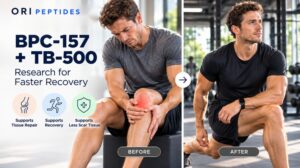
BPC-157 gets talked about online as a near-universal healing compound, but the research behind that reputation is narrower and earlier-stage than the marketing usually suggests. Here’s a plain-language, evidence-first look at what’s actually been studied, and what hasn’t. For a broader look at what BPC-157 is and how it’s thought to work, see our BPC-157 mechanism guide. This guide looks at BPC-157 benefits through that narrower evidence-first lens. This content is provided for Research Use Only (RUO).
What Benefits Are Studied
Researchers have looked at BPC-157 in a handful of specific areas. These are effects that have shown up in lab and animal research, not confirmed benefits in people:
- Tendon and ligament repair. The most-studied area, mostly using rodent models with surgically injured Achilles tendons, showing faster structural recovery and better healing markers than untreated animals.
- Gut protection and healing. Studied in animal models of stomach ulcers and bowel damage, where it appeared to protect the stomach lining and speed up recovery.
- General wound healing. Some studies have looked at whether it helps skin and other tissue close and heal faster after an injury.
- Blood vessel formation (angiogenesis). A proposed mechanism behind several of the effects above, since new blood vessels bring the oxygen and nutrients tissue needs to repair itself.
- Calming inflammation. Some animal and lab-dish research suggests it reduces inflammatory activity, which may be part of why injured tissue seems to recover faster.
How Strong Is the Evidence, Really?
This is the part that tends to get skipped in online discussion. A few honest limits apply across almost all of the research above:
| Research Area | What’s Been Studied | Evidence Type |
|---|---|---|
| Tendon and ligament repair | Faster healing after surgically induced injury | Animal studies only |
| Gut protection | Less damage and faster recovery in ulcer models | Animal studies only |
| Wound healing | Faster tissue closure after injury | Animal studies only |
| Blood vessel formation | Increased new vessel growth supporting repair | Animal and lab-dish studies |
| Inflammation | Lower inflammatory activity in injured tissue | Animal and lab-dish studies |
- Almost everything comes from animal models. Rats and mice make up the large majority of BPC-157 research, and results in animals don’t automatically carry over to people.
- A lot of the foundational research traces back to one research group. A large share of the original animal studies on BPC-157 come from the same Croatian research team that first isolated it, which limits how independently confirmed these findings are.
- The exact mechanism still isn’t fully mapped. Researchers have proposed several overlapping explanations for how BPC-157 might work, but there isn’t one settled, agreed-upon answer yet.
- Independent replication is limited. Fewer outside labs have repeated these findings than you’d expect for a compound this widely discussed online.
None of this means the research is fake or worthless, it means it’s early-stage, and “consistent with a healing effect in rats” is a different statement than “proven to help injuries in people.”
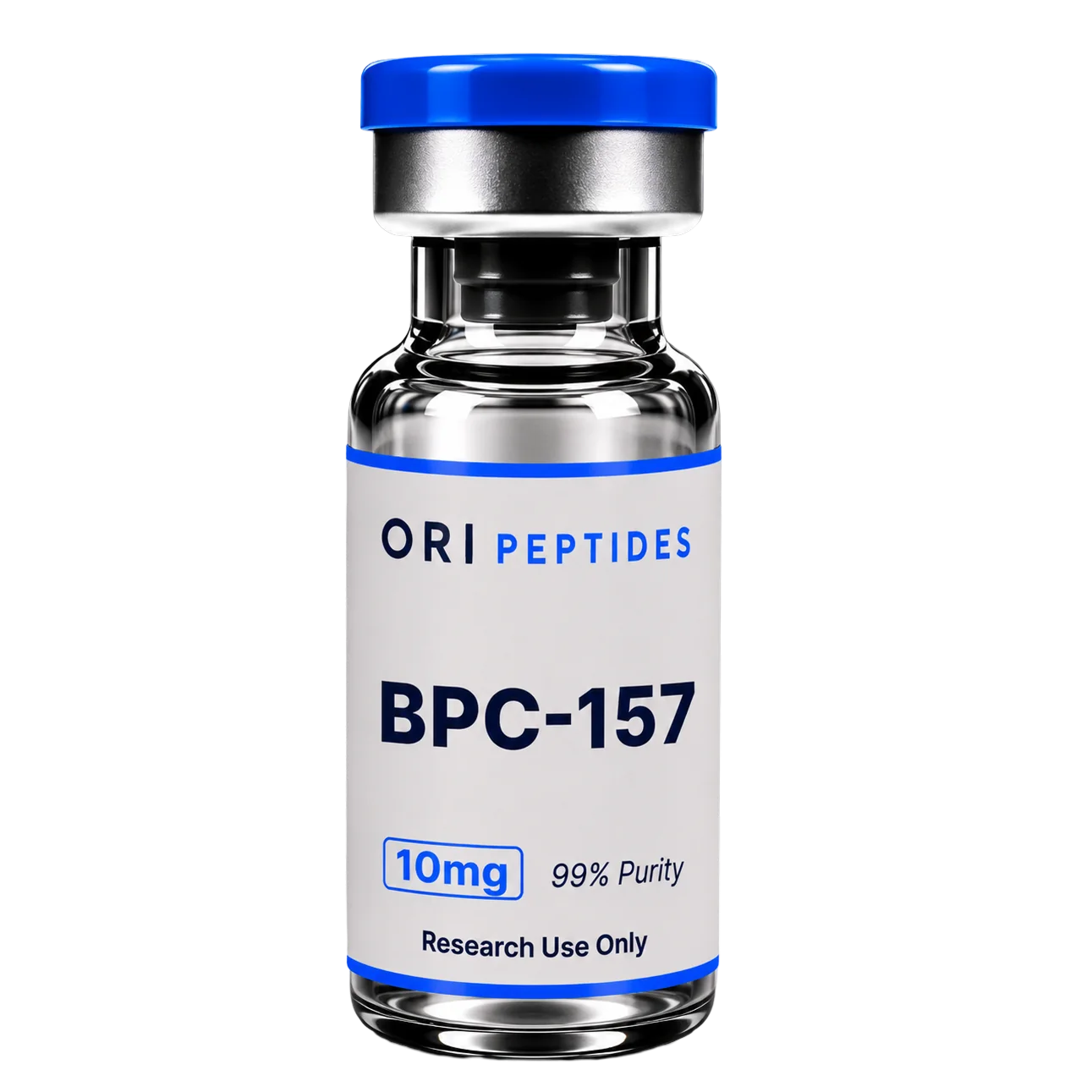
INJURY AND RECOVERY
BPC-157
Tendon and Muscle Repair, in More Detail
This is where BPC-157 has the most research behind it. In animal studies, injured tendons treated with BPC-157 have shown faster reattachment, better tissue organization, and stronger regrowth compared to untreated tendons. Researchers believe this connects back to the blood-vessel-growth effect mentioned above, since tendons are naturally slow-healing tissue with a limited blood supply to begin with. Similar patterns have been reported in muscle injury studies, including faster regrowth after crush injuries.
See also: TB-500 vs BPC-157, How Researchers Compare Them
Gut and Digestive Research
BPC-157 was originally identified as a fragment of a protein found in stomach juice, so gut-related research is where it has the longest history. Animal studies have looked at whether it protects the stomach lining from damage caused by drugs like ibuprofen, and whether it speeds up healing after bowel injury or surgery. These findings are part of why it’s discussed for digestive-tract research specifically, separate from its use in tissue-injury studies.
What’s Still Missing
Being direct about the gaps matters as much as describing the findings:
- No confirmed mechanism. Multiple pathways have been proposed, but none has been definitively confirmed as the primary way BPC-157 works.
- No large, independent human trials. The handful of small human studies that exist are early and limited, nowhere near the scale needed to draw firm conclusions.
- Regulatory status remains unsettled. In July 2026, a US FDA advisory committee voted in favor of allowing BPC-157 to be used in pharmacy compounding, but a committee vote doesn’t bind the agency, and no final approval has followed. BPC-157 is not approved by the FDA, its European counterpart, or any other major health authority for any use.
Put simply, BPC-157 remains firmly in the research phase, not the “established benefit” phase. For the reconstitution math involved in preparing it for a study, see our BPC-157 dosage and reconstitution guide.
See also: How to Reconstitute Peptides, Step by Step
FAQ
Is BPC-157 proven to work in humans?
No. Almost all of the supporting research comes from animal and lab-dish studies. It hasn’t been shown to work the same way in people through large, independent human trials.
Why does so much BPC-157 research come from the same source?
A large share of the original animal studies trace back to the same Croatian research group that first identified the compound, which is a genuine limitation until more independent labs replicate the findings.
Has the FDA approved BPC-157 for anything?
No. It isn’t approved by the FDA, its European counterpart, or other major health authorities. A 2026 FDA advisory committee vote favored allowing it in pharmacy compounding, but that vote doesn’t bind the agency, and no approval has followed.
What’s the strongest research area for BPC-157?
Tendon and ligament repair in animal models is the most-studied area, with a proposed link to how it may support new blood vessel growth at an injury site.
Research Use Disclaimer
This content is provided for Research Use Only (RUO). The compounds discussed are not drugs, dietary supplements, foods, or cosmetics, and are not intended for human or animal consumption, diagnostic use, or therapeutic use of any kind. They have not been evaluated by the FDA for safety or efficacy in humans. Any research use must be conducted by qualified professionals in a controlled laboratory environment, in accordance with all applicable institutional, local, and federal regulations.
Sources
- Sikiric P, et al. (2022). Stable Gastric Pentadecapeptide BPC 157 and Wound Healing. Frontiers in Pharmacology.
- Staresinic M, et al. (2003). Gastric pentadecapeptide BPC 157 accelerates healing of transected rat Achilles tendon. Journal of Orthopaedic Research.
- Seiwerth S, et al. (2018). BPC 157 and Standard Angiogenic Growth Factors. Current Pharmaceutical Design.