CJC-1295 and ipamorelin show up together constantly in growth hormone research discussions, more often as a pair than as two separate compounds. This guide walks through what each peptide is, how they are thought to work together, what research actually associates with the pairing, how research material is handled, what safety signals have been reported, and how to think about whether this pairing belongs in a given research protocol.
What Are CJC-1295 and Ipamorelin Peptides?
Both compounds are designed to raise growth hormone output, though each one works through a different part of that system.
- Two peptides, one shared target system. CJC-1295 and ipamorelin are both studied for their effect on the growth hormone system, the chain of signals that runs from the brain to the pituitary gland, a small gland at the base of the brain, and on to the liver.
- A common pairing across the field. The two are frequently marketed and studied together as a stack, a term used broadly across peptide research and peptide-focused clinics for combining compounds thought to work through different mechanisms.
- Neither is an approved medication. CJC-1295 and ipamorelin remain unapproved, non-prescription compounds. Any product marketed as a finished CJC-1295 and ipamorelin therapy for people is operating outside FDA approval, since no product built from either compound has cleared that process.
- What this guide covers. The sections below look at each compound individually, how they are thought to work as a pair, what research associates with them, how research material is handled, reported safety signals, and how to think about whether the pairing fits a given research use.
What Is CJC-1295?
CJC-1295 is the longer acting half of the pairing, built to keep a steady signal going rather than firing once and fading.
- A longer-acting GHRH copy. CJC-1295 is a lab made version of growth hormone releasing hormone, GHRH, engineered to stay active in the blood far longer than the natural hormone does.
- Two forms exist. The original version is attached to something called a drug affinity complex, DAC for short, which latches onto a common blood protein called albumin. That attachment is what keeps it working in the body for roughly six to eight days instead of clearing out quickly. A shorter version without that attachment, sometimes called Mod GRF 1-29, clears out of the body within about an hour, so a research protocol using it needs to dose far more often.
- Where it came from. CJC-1295 was developed by a company called ConjuChem and studied in clinical trials for growth hormone deficiency and lipodystrophy, a condition where body fat builds up or disappears in unusual patterns, before that program was discontinued.
- What single-dose research found. A 2006 study in healthy adults found that one dose raised growth hormone to two to ten times its normal level for six or more days. It also raised a related substance called IGF-1, a growth signal the liver releases once growth hormone tells it to, to roughly one and a half to three times its normal level for nine to eleven days. That is a far longer effect than the natural hormone gives, since the natural version fades within minutes.
- Reported safety signals. Pharmacy and clinical references describe soreness where the shot is given, skin flushing, headache, and fluid retention as the most commonly reported effects, along with changes in blood sugar, which is part of why doctors overseeing supervised use recommend checking blood sugar and IGF-1 levels.
What Is Ipamorelin?
Ipamorelin is the sharper, more selective half of the pairing, built to trigger a cleaner pulse rather than a sustained one.
- A five-piece GH trigger. Ipamorelin is a small peptide, just five amino acids long, that works through the same signal that ghrelin, the hormone that makes you feel hungry, normally uses to prompt the pituitary gland to release growth hormone.
- Developed by Novo Nordisk. It was studied clinically for slow gut recovery after surgery, a condition called postoperative ileus, before that program was discontinued because it did not work well enough, not because of a safety problem.
- More selective than older compounds. Ipamorelin does not raise cortisol or ACTH, two hormones tied to the body’s stress response, the way some older compounds in its class do. Researchers see that as an advantage, since it means fewer extra hormone changes to sort through when it gets paired with something else.
- Not an approved medication. Like CJC-1295, ipamorelin remains unapproved and non-prescription, sold strictly for laboratory research.
Hormone Therapy
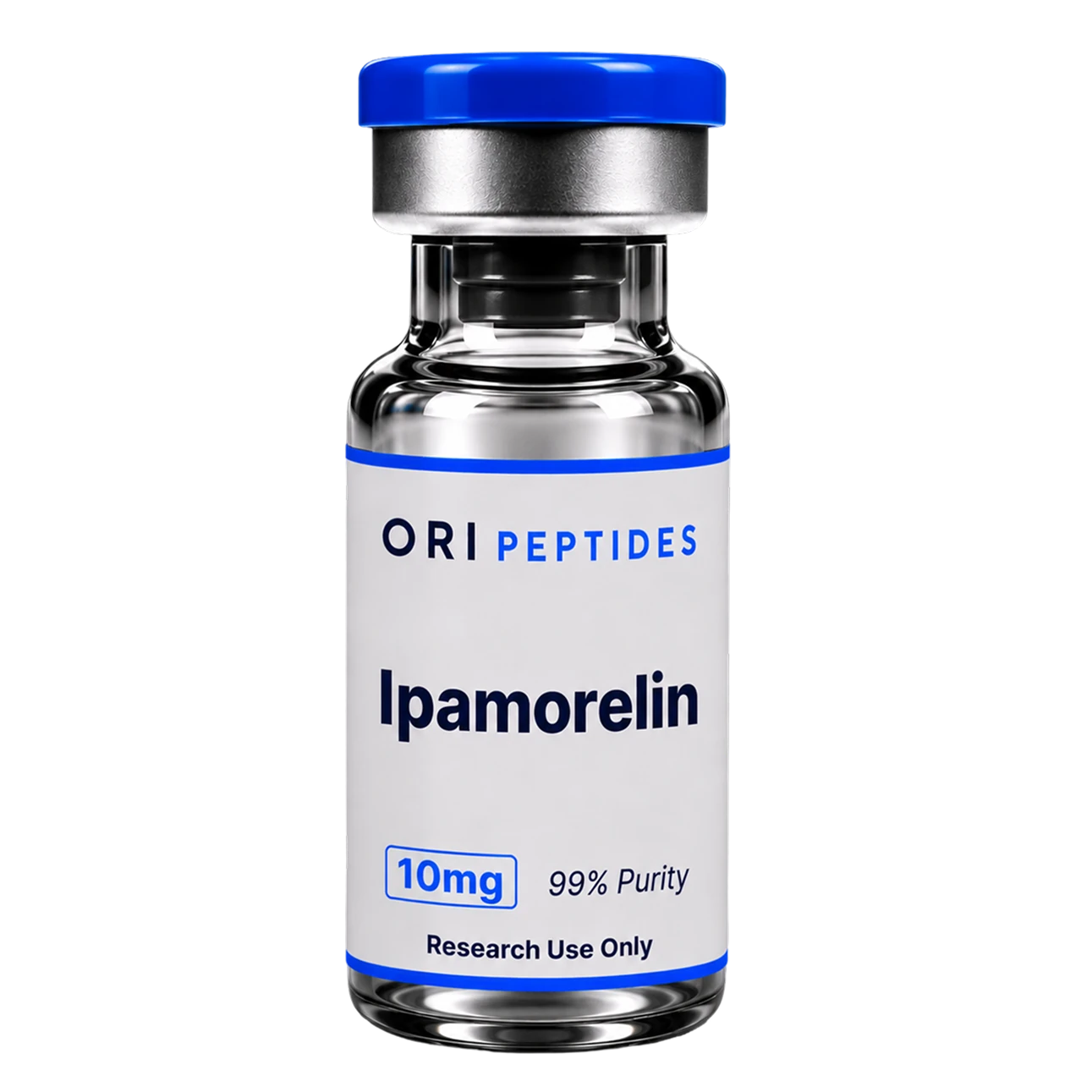
Ipamorelin
CJC-1295 vs Ipamorelin at a Glance
The two compounds are easiest to compare side by side, since most of what sets them apart comes down to which signal they send and where each one came from.
| CJC-1295 | Ipamorelin | |
|---|---|---|
| Signal it sends | GHRH copy, a sustained signal | Ghrelin-pathway trigger, a sharper burst |
| Developed by | ConjuChem | Novo Nordisk |
| Originally studied for | Growth hormone deficiency, lipodystrophy | Slow gut recovery after surgery |
| Typical role in the pairing | The steady, ongoing half | The immediate, triggering half |
| Approval status | Not FDA approved | Not FDA approved |
How Do These Peptides Work Together?
The appeal of pairing the two comes down to which signal each one sends, not a proven combined effect.
- Two signals, one target cell. CJC-1295 and ipamorelin each latch onto a different docking point on the same pituitary cells, so pairing them lets researchers see what happens when both signals arrive at once instead of one at a time.
- Described as a sustain-and-trigger pattern. Sources commonly describe CJC-1295 as providing the steady, ongoing signal and ipamorelin as providing a sharper, more immediate burst, though how much bigger the combined effect actually is compared to either compound alone has not been settled by a large number of head to head studies.
- A hypothesis more than a settled finding. The core idea, that hitting two different signals produces a bigger or fuller burst of growth hormone than either compound manages alone, is the reasoning behind the pairing. It is not something a large number of well controlled combination studies has actually proven.
- Frequently discussed together in the wider literature. Reviews covering peptides used in sports medicine, aging research, and doping control routinely list CJC-1295 and ipamorelin together as an example of this two-pathway approach.
What Are the Benefits of CJC-1295 and Ipamorelin?
Most of what gets described as a benefit is really a documented research interest rather than a confirmed outcome.
- Higher growth hormone and IGF-1 levels. Most of what is documented for either compound on its own comes down to raised growth hormone and IGF-1, the two blood markers researchers check to see whether a dose or combination is doing what it is supposed to do.
- Muscle and joint recovery research. A 2026 review in the American Journal of Sports Medicine grouped CJC-1295 and ipamorelin among several peptides examined for a possible role in muscle and joint recovery research.
- Aging and longevity research. A separate review in Frontiers in Aging discussed CJC-1295 and ipamorelin among peptides studied for their possible role in healthy aging.
- A mechanism is not a proven outcome. These are documented areas of research interest, not confirmed results. A biological mechanism for raising growth hormone is not the same thing as a proven outcome for muscle, fat, sleep, or aging, and most of the specific benefit claims in wider circulation outrun what controlled trials have actually established.
How to Use CJC-1295 and Ipamorelin Safely
This section covers how research material itself is handled safely in a lab setting, not a treatment protocol for a person, since neither compound has an approved dose, schedule, or delivery method for human use.
- Reconstitution follows the same general process. Bringing either peptide into solution follows the same steps used across most peptide research materials, covered in more depth in how to reconstitute peptides.
- Getting concentration right matters more for a blend. When two peptides are combined in one vial, tracking each one’s concentration separately becomes more important, not less, a calculation the peptide calculator is built to handle.
- Clean technique reduces contamination risk. Using a fresh, sterile needle and wiping the top of the vial with alcohol before each draw is standard lab practice for any reconstituted peptide, not something specific to this pairing.
- Storage follows the more cautious compound. Once mixed, a blended vial should be refrigerated, shielded from light, and used on the timeline of whichever peptide is less stable in solution, rather than assuming both hold up equally long.
What Are the Potential Side Effects?
Safety signals reported for these two compounds are reasonably consistent across the clinical and pharmacy references that discuss them.
- Most commonly reported. Pharmacy and clinical references most often mention injection site reactions, flushing, headache, and water retention.
- Reported less often. Nausea, dizziness, tingling sensations, and a temporary drop in blood pressure appear in some clinical descriptions, generally described as mild and short lived.
- Blood sugar and IGF-1 monitoring. Because both compounds are meant to raise growth hormone and IGF-1, clinical sources recommend monitoring blood sugar and IGF-1 levels specifically wherever either compound is used under supervision.
- A caution around cancer history. Some clinical sources specifically caution against use in anyone with a current or past cancer diagnosis, since growth hormone’s general job in the body is telling cells to grow.
- Reported information is not a safety guarantee. Long-term data for either compound, and for the combination specifically, remains limited, which is part of why regulatory status has not advanced for either one.
Is CJC-1295 and Ipamorelin Therapy Right for You?
This is really two different questions depending on who is asking, and this guide can only speak to one of them.
- A question two different audiences ask. Some clinics market a CJC-1295 and ipamorelin therapy directly to patients seeking muscle, recovery, sleep, or anti-aging benefits, a use case entirely separate from the laboratory research use this material is sold for.
- Neither compound has an approved use for people. Regardless of how a clinic frames a program, CJC-1295 and ipamorelin have not cleared FDA approval for any condition, so this question cannot be answered the way an approved medication’s suitability would be.
- Not a question this article can answer for a person. Research material sold here is intended for laboratory research by qualified professionals, not as a component of a personal wellness or recovery program, so whether a therapy built around these compounds is appropriate for an individual is a question for that person’s own licensed provider, not this guide.
- The research-use question is different. For a laboratory researcher, the relevant question is whether this two-compound idea fits a specific study design, not whether the pairing is right for an individual’s health goals.
This content is provided for Research Use Only (RUO). The compounds discussed are not drugs, dietary supplements, foods, or cosmetics, and are not intended for human or animal consumption, diagnostic use, or therapeutic use of any kind. They have not been evaluated by the FDA for safety or efficacy in humans. Any research use must be conducted by qualified professionals in a controlled laboratory environment, in accordance with all applicable institutional, local, and federal regulations.
FAQ
Is CJC-1295 the same as sermorelin?
No. Both are copies of GHRH, but sermorelin is a shorter piece that clears out of the body much faster, while CJC-1295 is changed to stay active for days rather than minutes.
Why is ipamorelin often paired with a GHRH copy instead of studied alone?
Ipamorelin sends its signal through a different path than GHRH copies do, so pairing the two is meant to test what happens when both paths are engaged at the same time, rather than relying on just one.
Does research show the combination works better than either compound alone?
Head to head data comparing the pair against each compound individually is limited. Most published figures come from studies of one compound at a time, so this remains a working hypothesis more than a settled finding.
Are the CJC-1295 and ipamorelin therapy programs some clinics advertise the same as this research material?
No. Those programs are marketed directly to patients as wellness or recovery treatments, a use case that sits outside FDA approval and is separate from the laboratory research material described in this guide.
Is CJC-1295 and ipamorelin research material legal to buy?
Research material sold for laboratory use only comes with its own rules, and these can vary, so it is worth checking directly rather than assuming.
Sources
- Wikipedia. CJC-1295, pharmacology and clinical trial history.
- Wikipedia. Ipamorelin, pharmacology and clinical trial history.
- Teichman SL, Neale A, Lawrence B, Gagnon C, Castaigne JP, Frohman LA. (2006). Prolonged Stimulation of Growth Hormone and Insulin-Like Growth Factor I Secretion by CJC-1295, a Long-Acting Analog of GH-Releasing Hormone, in Healthy Adults. The Journal of Clinical Endocrinology and Metabolism.
- Tewari K, Liu TP, Im C, Hamad C, Petrigliano F, Cheung EC, Kremen TJ Jr. (2026). Peptide Supplements and Their Therapeutic Applications in Sports Medicine. American Journal of Sports Medicine.
- Mavrych V, Shypilova I, Bolgova O. (2026). Therapeutic Peptides in Gerontology, Mechanisms and Applications for Healthy Aging. Frontiers in Aging.
- Coutinho LFD, de Oliveira Neves LF, Camilo RP. A New Era of Doping? Use of Peptide and Peptide-Analog Drugs in Recreational and Professional Sport and Bodybuilding, A Critical Review. Journal of Sports Medicine and Physical Fitness.
- Rite Aid. CJC-1295 Peptide, Overview and Safety Information.
CJC-1295 and ipamorelin research material is covered here alongside ipamorelin benefits, what the research examines, and both compounds are stocked in the hormone therapy research category.