
Retatrutide is an investigational compound from Eli Lilly, described as a triple-hormone-receptor agonist because it acts on three separate hormone signaling pathways at once. It has not been approved by the FDA, so most of what is publicly known about retatrutide side effects comes from published Phase 2 and Phase 3 trial reporting (the two stages of human testing that typically come before a possible approval) rather than an approved drug label. This brief pulls together what that trial literature has recorded so far, which side effects show up most often, how they track with dose, what sets retatrutide apart from dual-agonist compounds already in wider use, and where the data still falls short. It is written for research review, not as guidance for any person considering use.
What the Trial Program Actually Recorded
Retatrutide has gone through a full Phase 3 program under the TRIUMPH name, covering people with obesity alone (TRIUMPH-1), people with type 2 diabetes (TRIUMPH-2), and people with more severe obesity alongside cardiovascular risk factors (TRIUMPH-3), on top of the earlier Phase 2 dose-finding work. Each trial compared retatrutide against a placebo, an inactive treatment used as the baseline for comparison. Across that program, researchers logged side effects on a fixed schedule, noted how severe each one was, and tracked how many participants stopped taking the drug because of it. That last figure, the discontinuation rate, is often the more useful number for comparing trials, since it reflects real-world tolerability rather than a symptom checklist alone.
Digestive Side Effects Lead the Reports
Across every retatrutide trial reported so far, the most commonly logged side effects are gastrointestinal, and they follow a fairly consistent pattern:
- Nausea is the most frequently reported effect, with figures ranging from roughly the high teens at the lowest doses tested up into the 40 to 60% range at the highest doses across different parts of the program.
- Diarrhea and vomiting are both reported across a wide range depending on dose and trial, generally trailing nausea in frequency.
- Constipation and reduced appetite are reported less often than the effects above but still rank among the most common findings in the trial literature.
- Most of these digestive reports are described as mild to moderate, and they tend to ease once someone settles onto a steady dose rather than staying at that level throughout treatment.
A second, less common signal shows up alongside the digestive reports: dysesthesia, an unusual skin sensation described as burning, tingling, or tightness with no outside cause.
- Roughly 9% of participants reported it at a 9 mg dose.
- Around 21% reported it at a 12 mg dose.
- Under 1% reported it on placebo.
- Researchers studying the signal describe it as neurological rather than a skin problem itself, and note that it rarely led anyone to stop treatment.
Higher Doses Bring More Reported Effects
The trial data consistently shows a dose-response pattern, most visible in how often side effects led someone to leave the study before it ended:
- TRIUMPH-1 (obesity without diabetes): discontinuation ran from around 4% at the lowest dose tested to roughly 11% at the highest, against about 5% on placebo.
- TRIUMPH-2 (type 2 diabetes): a similar climb, with discontinuation increasing at higher doses against a placebo rate in the same range.
- TRIUMPH-3 (more severe obesity with cardiovascular risk factors): the same general shape, discontinuation climbing at higher doses even though the exact figures differ from the other two trials.
Gradual dose escalation appears to matter here. Trial reporting on participants who skipped the usual step-up schedule found a clearly higher rate of digestive complaints, consistent with the same escalation approach used for other GLP-1 and dual-agonist compounds.
How Retatrutide Differs From Dual Agonists
Retatrutide is described as a triple-hormone-receptor agonist, acting on three separate hormone systems at once: GLP-1 and GIP, two gut hormones involved in blood sugar and appetite, and glucagon, a hormone involved in energy use. Compounds like tirzepatide act on only two of those three. That third target appears to be part of why its side effect profile looks somewhat different from dual-agonist compounds already in wider use. A closer side by side sits in retatrutide vs tirzepatide, but the clearest example here is dysesthesia:
- Retatrutide: roughly 9 to 21%, depending on dose.
- Semaglutide: roughly 6%.
- Tirzepatide: under 1%.
That gap makes dysesthesia one of the more distinctive signals in the retatrutide record, rather than something shared across the whole drug class.
Cardiovascular findings get discussed less consistently:
- Small heart rate increases, generally in the range of 5 to 10 beats per minute.
- Heart rhythm findings that vary depending on where they are reported.
Because those numbers are not consistent across sources, they read as an open question rather than a settled comparison point.
What the Data Has Not Settled
Several parts of the retatrutide safety picture remain incomplete:
- Long-term safety has not been established, since the compound is still investigational and has not accumulated the years of postmarket reporting (real-world safety tracking collected after a drug is approved and sold) that approved GLP-1 drugs have.
- Reported serious adverse event rates in the Phase 2 trial were similar between the retatrutide and placebo groups, which reads as reassuring on its face, but a single early trial is a limited basis for ruling out rare events.
Retatrutide also carries the same class-wide cautions seen with other GLP-1 and dual-agonist compounds:
- A warning around thyroid C-cell tumors (tumors in a specific type of thyroid cell), based on animal studies rather than confirmed human cases.
- Exclusion of anyone with a personal or family history of medullary thyroid carcinoma (a rare thyroid cancer) or a related condition called multiple endocrine neoplasia type 2 (MEN 2).
- Monitoring that typically covers liver enzymes, pancreatic markers, kidney function, and thyroid hormones.
None of this is specific to retatrutide, but it belongs in the same research record as the newer dysesthesia and dose-response findings, and any protocol built around a compound such as the retatrutide 10mg research vial should treat it as background, not as a dosing guide.
Most Popular With Our Researchers
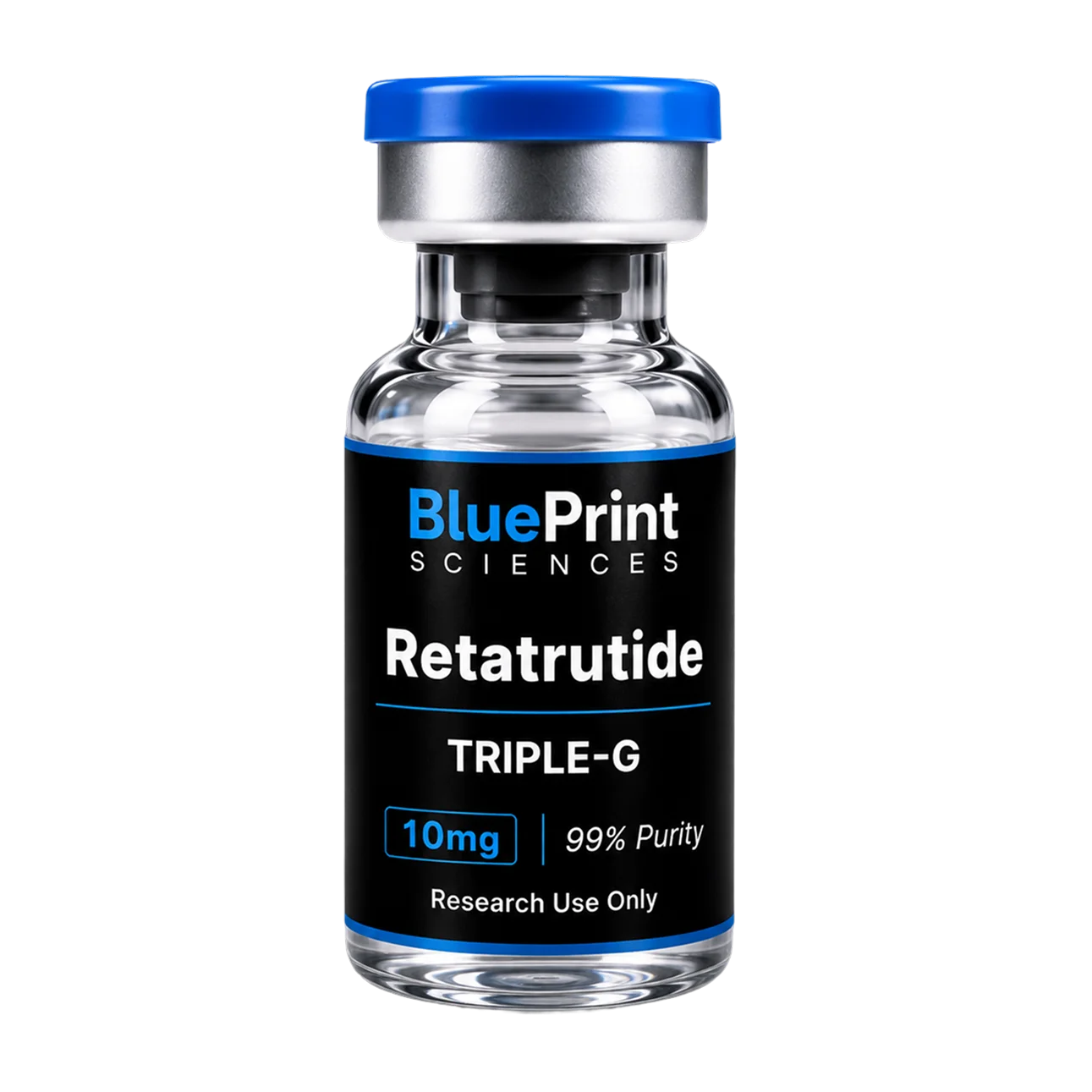
Retatrutide is a synthetic peptide that activates three receptors at once: GLP-1, GIP, and glucagon. Researchers study this triple-action mechanism to learn more about metabolism, energy use, and blood sugar regulation. Each vial is tested for purity.
Why This Stays Research Use Only
Research Use Only. This content is provided for Research Use Only (RUO). The compounds discussed are not drugs, dietary supplements, foods, or cosmetics, and are not intended for human or animal consumption, diagnostic use, or therapeutic use of any kind. They have not been evaluated by the FDA for safety or efficacy in humans. Any research use must be conducted by qualified professionals in a controlled laboratory environment, in accordance with all applicable institutional, local, and federal regulations. Retatrutide has no approved label, so the figures above describe trial reporting for an investigational compound and are shared here as research background, not as a handling or dosing guide for any research material.
Sources
- Jastreboff AM, et al. (2023). Triple-Hormone-Receptor Agonist Retatrutide for Obesity, A Phase 2 Trial. New England Journal of Medicine.
- Coskun T, et al. (2025). Effects of Retatrutide on Body Composition in People With Type 2 Diabetes, a Substudy of a Phase 2 Trial. The Lancet Diabetes and Endocrinology.
- Tewari J, et al. (2025). Efficacy and Safety of Triple Hormone Receptor Agonist Retatrutide for the Management of Obesity, a Systematic Review and Meta-Analysis. Expert Review of Clinical Pharmacology.
- Abdrabou Abouelmagd A, et al. (2025). Efficacy and Safety of Retatrutide, a Novel GLP-1, GIP, and Glucagon Receptor Agonist for Obesity Treatment, a Systematic Review and Meta-Analysis of Randomized Controlled Trials. Baylor University Medical Center Proceedings.
- Sinha B, Ghosal S. (2025). Efficacy and Safety of GLP-1 Receptor Agonists, Dual Agonists, and Retatrutide for Weight Loss in Adults With Overweight or Obesity, A Bayesian Network Meta-Analysis. Obesity.
- Bhat S, et al. (2025). Efficacy and Safety of Incretin Co-Agonists, Transformative Advances in Cardiometabolic Healthcare. World Journal of Cardiology.
Treat the dose-level percentages above as approximate figures drawn from this literature rather than exact primary-trial numbers, since retatrutide does not yet carry an FDA-approved label to check them against directly.