NAD+ peptide is a common search term, but it is worth being direct about it from the start, NAD+ itself is not a peptide. This guide defines what NAD+ actually is, how it works inside cells, what benefits longevity research has actually looked at, how research material is handled, and the safety points worth knowing.
What Is NAD+?
NAD+, short for nicotinamide adenine dinucleotide, is a small molecule found in every cell in the body. It helps cells turn food into usable energy, and it is built from two connected parts joined together. It is not made of amino acids, and it does not have the link between amino acids that is what actually makes something a peptide. That is the simple reason NAD+ does not count as a peptide, even though it often gets called one in marketing and search terms.
- What it is. A small molecule made of two connected parts that switches back and forth between two states, called NAD+ and NADH, as it helps carry energy inside cells.
- Why levels matter. The balance between NAD+ and NADH inside a cell affects how well that cell can produce usable energy.
- Where it declines. Some research suggests NAD+ levels can drop by roughly half between a person’s twenties and their fifties, though results are inconsistent and seem to depend on which part of the body is studied.
- Not a peptide. NAD+ is a small molecule built from nucleotides, not a chain of amino acids. Peptides are a completely different category of research compound, even when they turn up in the same longevity conversation, such as GHK-Cu, a genuine peptide studied for skin and tissue repair rather than cellular energy.
How NAD+ Works
NAD+ works like a shuttle that carries energy inside cells, picking up energy during the breakdown of sugar and fat and dropping it off at the point where the cell actually produces usable energy, a small structure inside the cell called the mitochondria. Every cell that makes energy this way needs NAD+ to keep the process running. NAD+ is also used up by two groups of proteins closely tied to aging research, one that helps control which genes are switched on, and one that helps repair damaged DNA. Longevity research is trying to find out whether having more NAD+ available helps these two processes keep working for longer, a question studied mostly in cells and animals so far, not in people.
- Two protein groups that use it up. One group, called sirtuins, uses NAD+ to help control which genes are switched on, including genes tied to metabolism and stress response. The other, called PARPs, uses NAD+ to help repair damaged DNA. Both are central to aging research.
- Where sirtuin research started. Sirtuins first drew attention through yeast studies that linked them to extended cell lifespan, which is part of why later mammalian research treated NAD+ availability as a lever worth studying rather than a side detail.
- What PARPs actually repair. PARPs rush to spots where DNA has small breaks in it and use NAD+ as fuel to fix that damage, which is why heavy DNA damage can quickly use up a cell’s NAD+ supply.
- Where NAD+ comes from in the body. Cells can build NAD+ starting from what a person eats, or by recycling pieces that are already inside the cell instead of building NAD+ from scratch every time. This recycling route was first described in the 1950s.
- Precursor compounds. Two related compounds, nicotinamide mononucleotide (NMN) and nicotinamide riboside (NR), sit one or two chemical steps before NAD+ in this process. Cells can convert either one into NAD+, which is why research on raising NAD+ levels often studies these precursors directly.
- Why the decline matters mechanistically. If sirtuins and PARPs both depend on a steady NAD+ supply, a falling supply could mean both systems run less efficiently, though this remains a research question rather than a settled finding.
Benefits of NAD+
Research on NAD+ and the compounds that raise it has mostly looked at energy levels inside cells, how well the body repairs damaged DNA, and, on a smaller scale, brain aging. Animal studies of NMN and NR have reported better health markers and, in some cases, longer lifespans. Human research is thinner but growing, with the clearest results so far involving NMN taken by mouth and its effect on blood sugar control.
- Animal research. Mouse studies of NAD+ precursors have reported better blood sugar control, more physical stamina, and other signs of improved metabolic health, especially in older animals.
- The clearest human finding so far. A controlled study of NMN taken by mouth found improved blood sugar control (insulin sensitivity, meaning how well the body responds to insulin) in a group of women with early signs of diabetes, one of the more direct pieces of human evidence in this field.
- Brain aging, a research question. Because NAD+ helps power nerve cells and helps repair their DNA, researchers have looked at whether keeping NAD+ levels up is connected to healthier brain aging, though this work is still early and is not a treatment claim of any kind.
- Muscle and heart research in animals. Studies in rodents have also reported effects on muscle strength and heart related markers, not just metabolism, though again this evidence mostly comes from animals rather than confirmed human results.
- What it does not show. NAD+ research has not shown that raising NAD+ levels reverses aging or works as a general wellness fix, and most of the strongest findings still come from animal studies rather than people.
NAD+ Dosage
Research material for NAD+ usually comes as a freeze-dried powder in a glass vial, which needs to be mixed with a liquid, often bacteriostatic water, before it can be used, the same way most research peptides and small molecule research compounds are handled. NAD+ breaks down faster when it is exposed to light or warmth, which is why it should be kept frozen or refrigerated and out of direct light until it is ready to be prepared.
- Before mixing. Keep the freeze-dried powder frozen or refrigerated and away from light. It stays stable far longer in this form than once it has been mixed.
- Mixing it. Add the liquid slowly down the inside of the vial and roll the vial gently instead of shaking it, since shaking can damage the material.
- Getting the amount right. How much liquid to add depends on the vial size and the concentration needed, a calculation walked through step by step in how to reconstitute peptides and handled directly with the peptide calculator.
- After mixing. Keep the mixed solution refrigerated and use it within the time noted on the product documentation, since it does not last indefinitely once prepared.
- Common mistakes. Leaving vials out at room temperature or in the light, skipping the concentration calculation, and using a solution that looks cloudy or an odd color are the most common errors.
- Different forms, similar handling. Some suppliers sell NAD+ itself, while others sell the precursor compounds NMN or NR instead. All three are typically handled as freeze-dried research material with the same general storage and reconstitution precautions, though exact stability can vary by product.
Anti-Aging
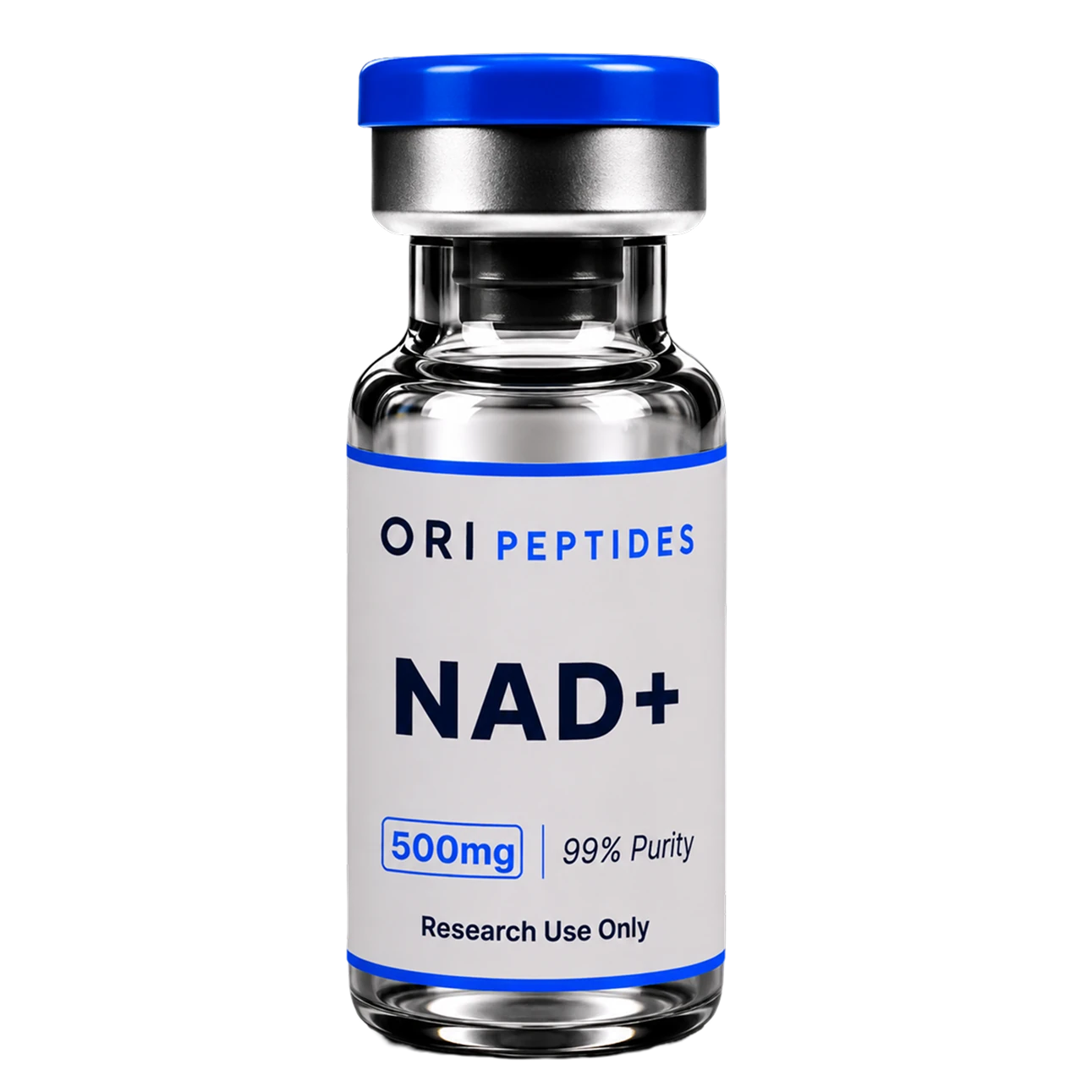
NAD+ 500mg
Side Effects and Safety of NAD+
Most of what is known about NAD+ side effects comes from clinical use and from studies of the compounds that raise it, not from unformulated research material itself, alongside the general cautions that apply to any research compound. The list below reflects what has been reported in that clinical and precursor literature, described here for background rather than as a guide to expected effects.
- Most commonly reported. Nausea, flushing, a warm reddish feeling in the skin, headache, and irritation where an injection was given.
- Flagged as a possible concern. Some sources point to a possible but unproven cancer risk, since NAD+ plays a role in how cells grow, plus extra caution for anyone with existing liver or kidney problems.
- No approved product for people. There is no approved human product, dose, or method for using NAD+, and any human use sits outside anything officially approved.
- Where this information actually comes from. Most of what is reported comes from clinical use of NAD+ given directly to people, or from studies of the precursor compounds, not from unformulated research material, so the two should not be assumed to carry the same safety record.
- Quality control has been an issue. In 2025, regulators pulled a batch of contaminated NAD+ products off the market, using their most serious level of recall, a reminder that quality varies widely between suppliers operating outside a controlled research setting.
This content is provided for Research Use Only (RUO). The compounds discussed are not drugs, dietary supplements, foods, or cosmetics, and are not intended for human or animal consumption, diagnostic use, or therapeutic use of any kind. They have not been evaluated by the FDA for safety or efficacy in humans. Any research use must be conducted by qualified professionals in a controlled laboratory environment, in accordance with all applicable institutional, local, and federal regulations.
FAQ
What is NAD+?
NAD+ is a small molecule found in every cell that helps the body turn food into usable energy. It plays a central role in both energy production and DNA repair.
Is NAD+ a peptide?
No. NAD+ is a small molecule, not a chain of amino acids. It often gets searched and marketed alongside peptides, but chemically the two are unrelated categories of compound.
Does NAD+ decline with age?
Some research has found lower NAD+ levels in older animals, but results in people are mixed and seem to depend on which tissue is studied.
Is NAD+ the same as NMN or NR?
No. NMN and NR are separate compounds that the body can convert into NAD+. NAD+ is the finished molecule, while NMN and NR sit one or two steps before it.
What does research say about NAD+ and aging?
Research has looked at how NAD+ affects two groups of proteins tied to aging, called sirtuins and PARPs, mostly in cells and animals so far. Human evidence is still limited, with the clearest results so far involving NMN and blood sugar control.
Is NAD+ research material legal to buy?
Research material sold for laboratory use only comes with its own rules, and these can vary, so it is worth checking directly rather than assuming.
What is the difference between NAD+ and NADH?
They are the same molecule at two different points in its job. NAD+ is the empty, ready to work form, and NADH is what it becomes once it has picked up energy to carry. Cells constantly switch the molecule between these two states as part of normal, everyday energy production.
Sources
- Verdin E. (2015). NAD+ in Aging, Metabolism, and Neurodegeneration. Science.
- Imai S, Guarente L. (2014). NAD+ and Sirtuins in Aging and Disease. Trends in Cell Biology.
- Rajman L, Chwalek K, Sinclair DA. (2018). Therapeutic Potential of NAD-Boosting Molecules, the In Vivo Evidence. Cell Metabolism.
NAD+ referenced above is stocked in the anti-aging category. Related longevity research compounds, including MOTS-C, are stocked in the same category, alongside the rest of the shop.