Peptides for skin are one of the more visible corners of peptide research right now, showing up in skincare marketing well before the underlying science gets explained. The most studied one, GHK-Cu, was actually found by accident. A researcher in the 1970s noticed that aging liver tissue in lab experiments started behaving more like young tissue once it was exposed to young blood plasma, and traced the effect back to this one small peptide, now one of the more studied compounds in anti-aging research. This guide looks at what the term actually means, what benefits research has looked at, whether any single peptide stands out as the most effective, and how researchers classify the different types used in skincare.
What Are Peptides for Skin Care?
Peptides are tiny pieces of protein, short strings of the same building blocks that proteins are made of, just far fewer of them. Skincare brands add them to products because a handful of these naturally occurring pieces seem to help skin repair itself and rebuild the structure that keeps it firm. But having a peptide listed on the label does not mean a product actually works, that depends a lot on how well the product is made.
- A category, not one ingredient. “Peptides for skin” is a broad term covering many different substances that each do a different job, not one single ingredient.
- What the term actually means. A peptide is a small piece of protein, small enough to act like a message that tells skin cells what to do, instead of an ingredient the skin just soaks up.
- Why age keeps coming up. GHK-Cu levels in blood run at roughly 200 nanograms per milliliter in a person’s twenties, and research has found that figure falls by around half by the sixties, which is part of why aging research took an interest in it in the first place.
- What this article focuses on. The rest of this guide centers mainly on GHK-Cu, the peptide studied the most in this category, though it is one of several being looked at.
Benefits of Peptides for the Skin
Most research on skin peptides looks at three things: whether they help skin make more collagen and elastin, the proteins that keep skin firm and stretchy, whether they help wounds heal, and whether they reduce the kind of cell damage linked to visible aging. Most of the strongest findings still come from lab studies rather than large studies in people.
- Making more collagen and elastin. Lab studies have looked at whether certain peptides, GHK-Cu included, tell skin cells to make more collagen and elastin, the two proteins that keep skin firm and stretchy.
- Wound healing research. Some of the earliest peptide research in this space came from studies on how wounds heal, looking at whether these peptides help wounds close faster and heal better.
- Calming inflammation and cell damage. Overviews of peptide skincare point to less inflammation and less of the cell damage linked to aging as two of the more consistently studied effects.
- A caveat worth keeping in mind. At least one skin doctor’s review points out that well known ingredients, such as hyaluronic acid and retinoids, are just as well studied and often cheaper, and that a peptide being listed on a label does not guarantee the product works.
- Where the deeper dive lives. A full breakdown of what GHK-Cu research specifically has found is covered in GHK-Cu benefits, what the research examines.
What Are the Most Effective Peptides for Skin?
This is one of the harder questions in the category to answer honestly, mainly because so few peptides have been tested head to head. GHK-Cu has the largest body of published research behind it, which is a statement about how much it has been studied, not necessarily proof that it outperforms other peptides for a given result.
- GHK-Cu, the most studied. Among peptides marketed for skin, GHK-Cu shows up most often in the published literature, covering collagen signaling, wound healing, and antioxidant activity.
- Many named peptides, little direct comparison. Skincare marketing lists dozens of named peptide ingredients, but very few studies compare one directly against another under the same conditions.
- Most published research uses laboratory models. Cell culture and animal studies dominate this field, with human trials still limited in number and scale, so claims of one peptide being the most effective for people are not well supported yet.
- Formulation matters as much as the peptide. Whether a peptide can actually reach skin in a meaningful concentration once formulated is a separate, still debated research question from whether it has an effect in a lab setting.
- A different category worth knowing. SS-31 comes up in the same anti-aging conversation, but it is studied mainly for mitochondrial and cellular energy support rather than a skin-specific effect, so it is not evaluated on the same terms as GHK-Cu and the other peptides covered here.
Types of Peptides in Skincare
Researchers and formulators generally sort skin peptides into a small number of working categories based on what they appear to do once applied.
- Signal peptides. These work a bit like a text message to skin cells, most often prompting fibroblasts, the cells responsible for collagen, to produce more of it.
- Carrier peptides. These work more like a delivery vehicle, typically paired with a trace metal, most commonly copper, to help ferry it into the skin more efficiently. GHK-Cu is the best known example.
- Enzyme-inhibitor peptides. These are studied for their potential to slow the enzymes that break existing collagen down, rather than prompting new collagen production directly.
- Neurotransmitter-affecting peptides. These are studied for a more localized effect on the small muscle movements linked to expression lines, which is why they sometimes get marketed as a needle-free alternative to injectable wrinkle treatments, a comparison the research does not fully back up.
- Why the classification matters. A study describing a signal peptide is making a different claim than one describing a carrier or enzyme-inhibitor peptide, even though all of them get marketed under the same broad peptide label. In practice, some peptides show properties of more than one category, so this classification is more useful for organizing research than for drawing a hard line.
Anti-Aging
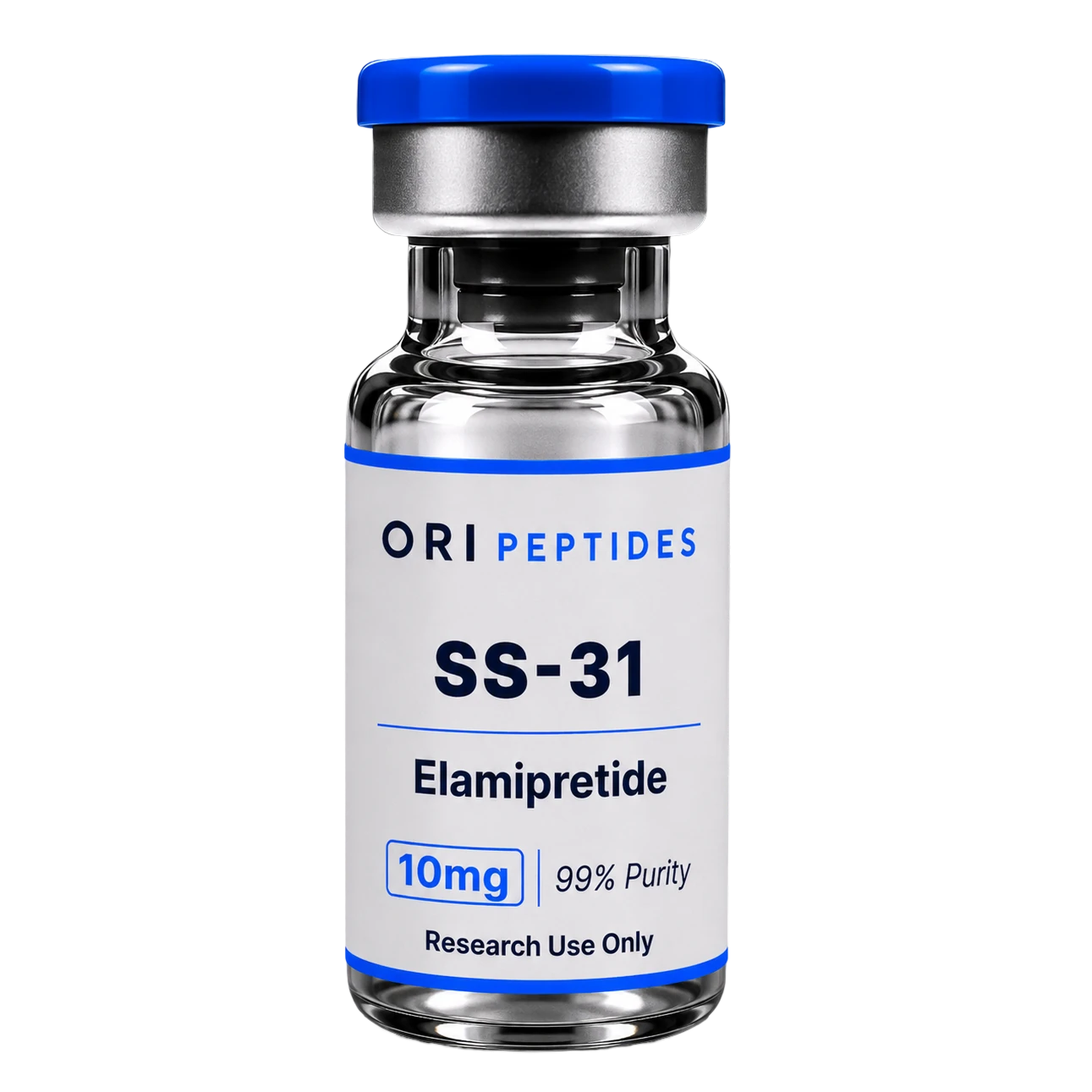
SS-31 10mg
This content is provided for Research Use Only (RUO). The compounds discussed are not drugs, dietary supplements, foods, or cosmetics, and are not intended for human or animal consumption, diagnostic use, or therapeutic use of any kind. They have not been evaluated by the FDA for safety or efficacy in humans. Any research use must be conducted by qualified professionals in a controlled laboratory environment, in accordance with all applicable institutional, local, and federal regulations.
FAQ
What are peptides for skin care?
Peptides for skin care are short chains of amino acids added to products because certain sequences appear to influence collagen production, tissue repair, and other processes tied to how skin ages.
What do peptides do for your skin?
Research has mostly looked at whether peptides can prompt skin cells to produce more collagen and elastin, support wound repair, and reduce inflammation and oxidative stress, though most of this evidence comes from laboratory studies rather than large human trials.
What are the most effective peptides for skin?
There is no well established answer. GHK-Cu has the most published research behind it, but few peptides have been tested directly against each other, so claims that one is the most effective are not strongly supported yet.
What are the main types of peptides used in skincare?
The most discussed categories are signal peptides, carrier peptides, enzyme-inhibitor peptides, and neurotransmitter-affecting peptides, each studied for a different mechanism.
What is GHK-Cu?
GHK-Cu is a copper-binding peptide that occurs naturally in the body and is the most studied peptide in skin research, with work looking at collagen, wound healing, and antioxidant activity.
Is it legal to buy peptides for skin research?
Research material sold for laboratory use only comes with its own rules, and these can vary, so it is worth checking directly rather than assuming.
Sources
- Pickart L, Margolina A. (2018). Regenerative and Protective Actions of the GHK-Cu Peptide in the Light of the New Gene Data. International Journal of Molecular Sciences.
- Pickart L. (2008). The Human Tri-Peptide GHK and Tissue Remodeling. Journal of Biomaterials Science, Polymer Edition.
- Gorouhi F, Maibach HI. (2009). Role of Topical Peptides in Preventing or Treating Aging Skin. International Journal of Cosmetic Science.
- Cleveland Clinic. Peptides for Skin, What They Are and What the Research Shows.
GHK-Cu referenced above is stocked in the anti-aging category, alongside related compounds such as SS-31.